A webinar series sparked a visit. A visit sparked a conversation about how modern hospitals can work. Denmark's experience with single room care and digital oversight is drawing health system leaders from around the world. This time from the UK.
The UK is months away from a major health reform. At the same time, NHS England is running the largest hospital construction program in a generation – dozens of new hospitals, billions in investment, and a core design principle decided: single-patient rooms, not shared wards.
Before the big decisions are finalized, it makes sense to seek out places where the model is already up and running. Denmark has been building and operating single-room hospitals for years.
But why single rooms instead of shared wards?
Better for infection control, privacy, and better for patients. But also, a fundamentally different operational environment – one where clinical staff lose the natural line-of-sight that open wards provide.
So how do you maintain oversight when every patient is behind a closed door? An issue to consider, when going from shared wards to single rooms.
A webinar series led to a plane ticket – how it all started
NHS England's New Hospital Programme (NHP) operates in waves. Norfolk and Waveney University Hospitals Group is part of Wave 1 – one of the first trusts to build under the programme. The NHP Digital Engagement Team launched an International Digital Exemplar webinar series to connect NHS leaders with health systems that had already made the transition.
On March 4, Danish hospital leaders joined the webinar – among them Brian Holch Kristensen, Head of Quality and Education at Bispebjerg and Frederiksberg Hospital, and Jannick Brennum, Deputy CEO at Rigshospitalet.
They spoke about how digital tools – patient monitoring, situational awareness systems, logistics command centers – were being co-developed directly with clinical staff. Not procured from a catalogue, but built from the ground up, inside the hospitals, around real ward workflows.
It sparked something. A month later, Toni Platts and James Chadwick, from Norfolk and Waveney University Hospitals Group, got on a plane to Copenhagen.
"Thank you to everyone we have met during this visit. It's been immensely informative – and this is based on the sharing of your lived experience of building future healthcare facilities and your willingness to be open about what has gone well and what has been a challenge. I've left feeling inspired and have so much to share with my peers." - Toni Platts, Associate Clinical and Operational Director, New QEH, Queen Elizabeth Hospital King's Lynn NHS Foundation Trust.
Three stops – three distinct approaches to the same challenge
The visit moved through three environments. Two within the Innovation District Copenhagen (IDC) – a collaborative ecosystem that brings together research institutions, hospitals, startups, and established companies to accelerate solutions in life sciences, biotechnology, and health technology – and one beyond it.
01 – AI patient monitoring: Rigshospitalet's Innovation Lab for Neuro Critical Care
Single-room care is a fundamentally different operational environment – staff lose the natural line-of-sight that open wards provide. At Rigshospitalet, clinical teams co-developed MIGO, an AI-based camera monitoring system that provides real-time alerts and enables remote patient observation. Built around real ward workflows, with clinicians in the room during development.
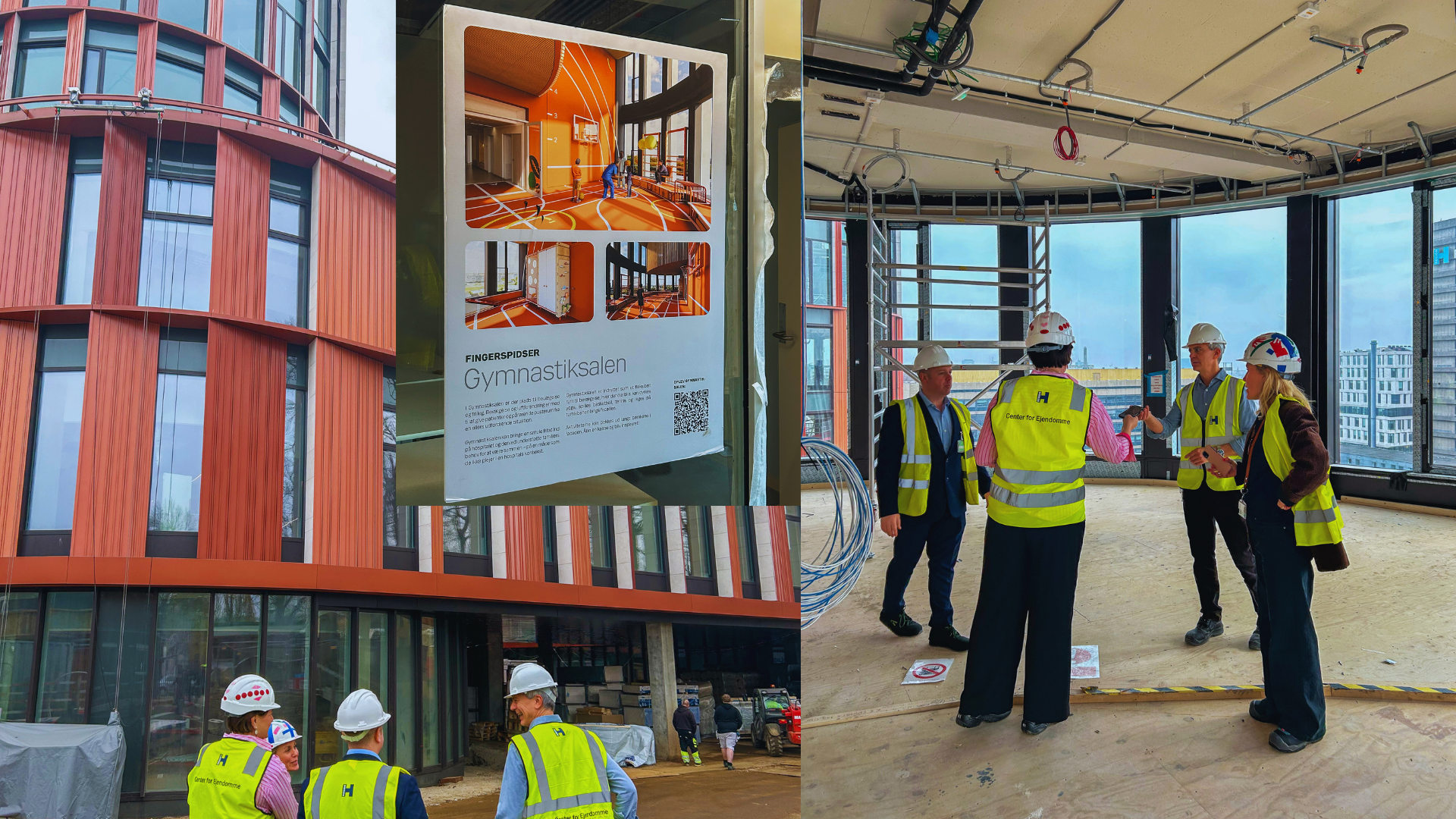
02 – Design thinking at scale: Mary Elizabeths Hospital
Copenhagen's major new hospital for children, young people, and pregnant women is still under construction – and already drawing international attention. What stands out is not only the architecture, but how patient experience and staff workflow are embedded into the spatial design from day one.
03 – Command center logistics: Bispebjerg Hospital
Think of it like an airport control tower, but for a hospital. Bispebjerg's command center – developed together with Systematic – gives staff real-time visibility across portering and logistics. Alongside it, iAware, co-developed with the University of Copenhagen and Bispebjerg Hospital, uses AI to give ward staff situational awareness across the department – helping them prioritize and respond faster.
Beyond the IDC, the delegation also visited Bispebjerg Hospital's The Need Factory – their internal needs-driven approach to innovation and procurement, where innovation starts with clinical need, not vendor pitch.
What makes this a model worth studying
The common thread across all three sites isn't a specific technology. It's an approach: solutions developed in collaboration with the clinical teams who will use them, built to address concrete operational needs, and iterated with feedback from the start.
That's a different model than procuring off-the-shelf software and adapting workflows to fit. And it's a difference that's hard to see on paper – which is precisely why visits like this one matter.
Facing a design challenge in your hospital construction program?
The knowledge exchange that brought Norfolk and Waveney University Hospitals Group to Copenhagen is part of a broader series of study visits, webinars, and roundtables for international health system leaders. If you're working through the shift to single-room care – or any of the operational and digital questions that come with it.
We would like to hear what you're grappling with.
See what they saw during their visit in the gallery below.