Three decades of shared public ownership have resulted in one of the world's most connected health systems. A reform is pushing it further.
Every GP visit, hospital admission and municipal care interaction in Denmark runs on a shared digital infrastructure. Electronic patient records flow across hospitals. Citizens check their own health data through a national portal recognized by 96 percent of the population. It is, by most measures, one of the most digitalized healthcare systems in the world – and the product of a journey that began over 30 years ago.
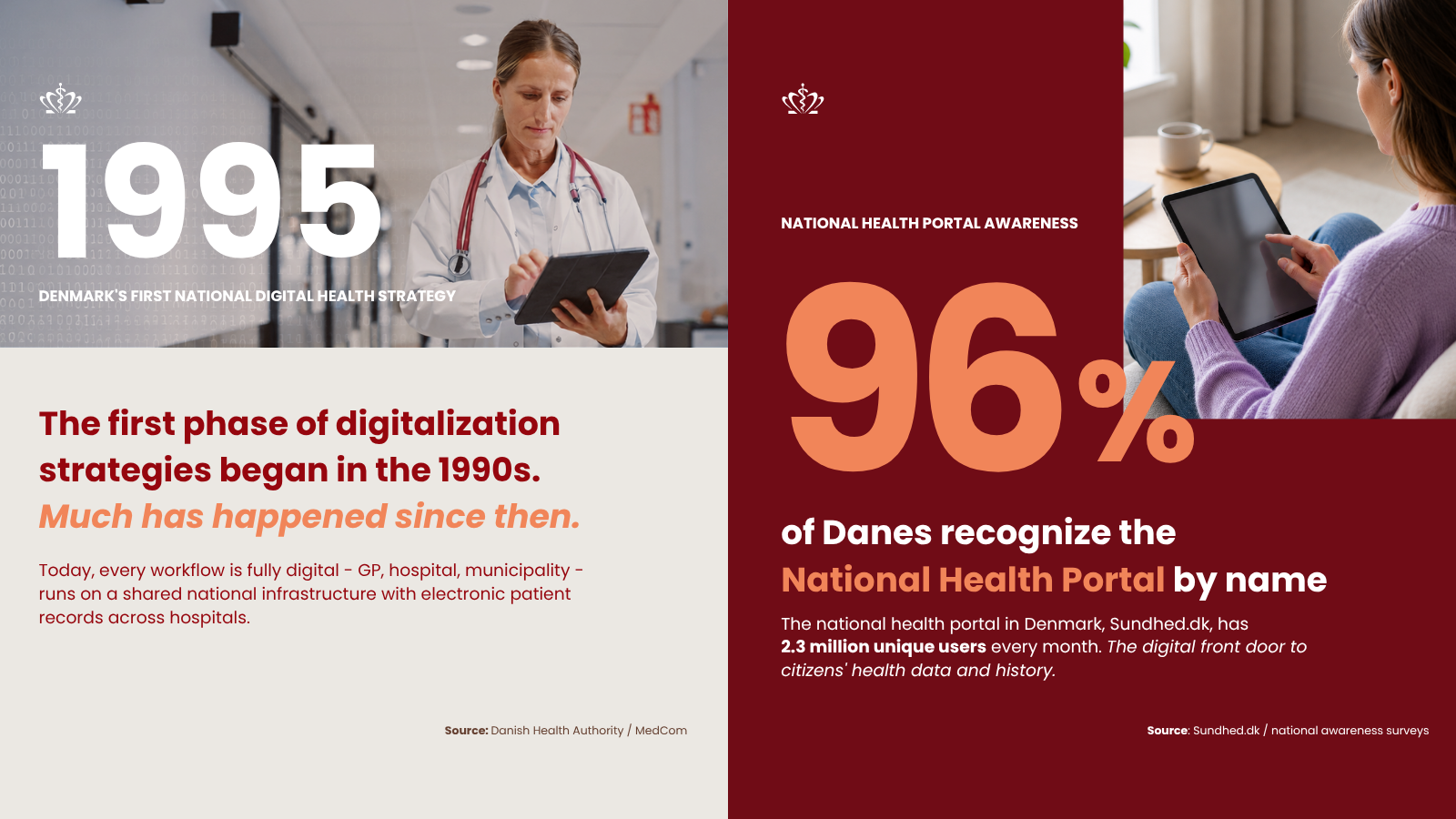
What makes the Danish model distinctive is not the technology itself but the governance and collaboration behind it. The state, regions and municipalities jointly develop, own and operate the country's digital health solutions – a multi-public ownership model where those who benefit most also contribute most.
The result is a set of scalable, sustainable platforms that serve citizens, professionals and businesses alike, rather than fragmented systems that struggle to talk to each other.
That approach has earned something no technology can manufacture on its own: public trust.
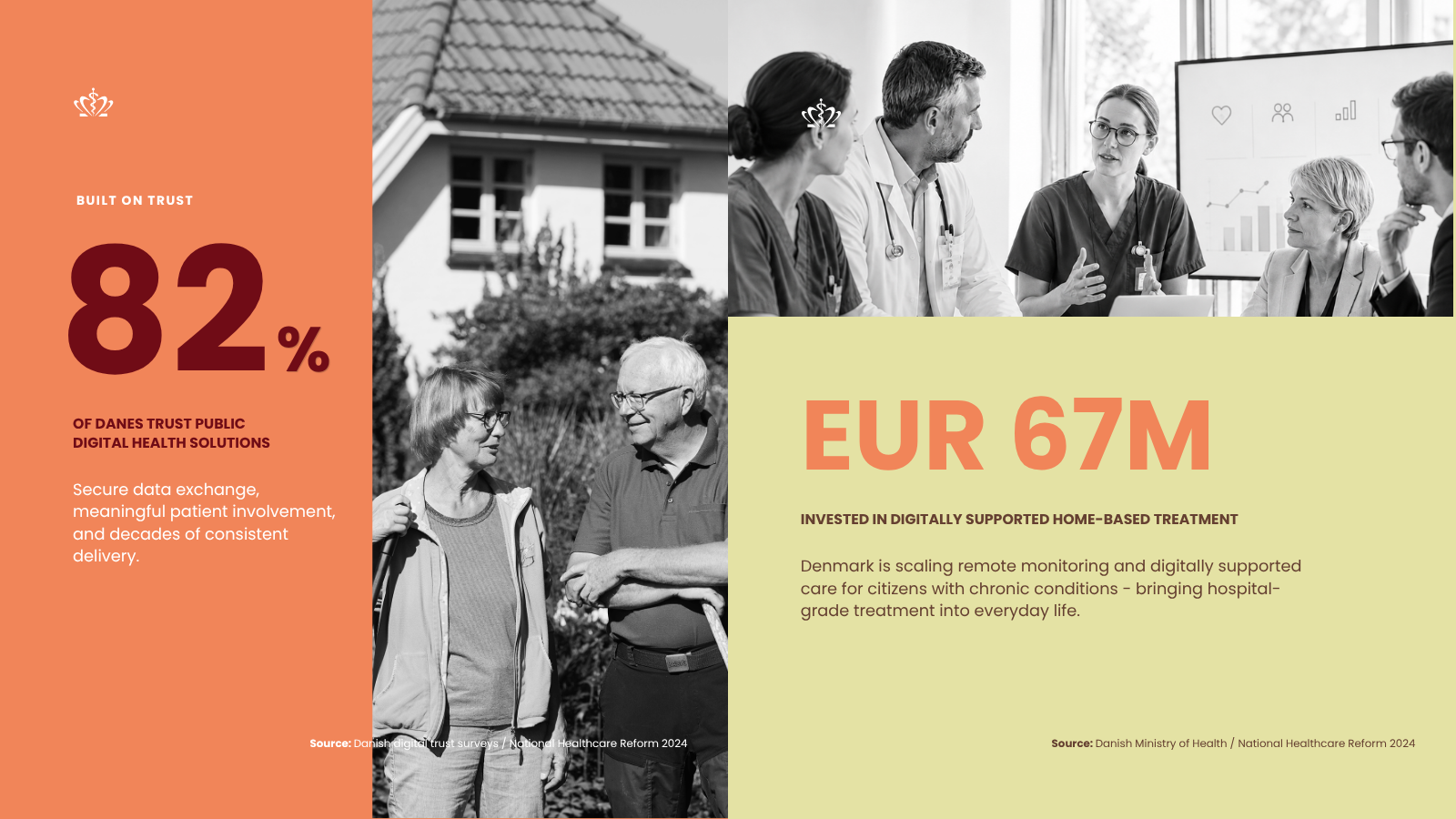
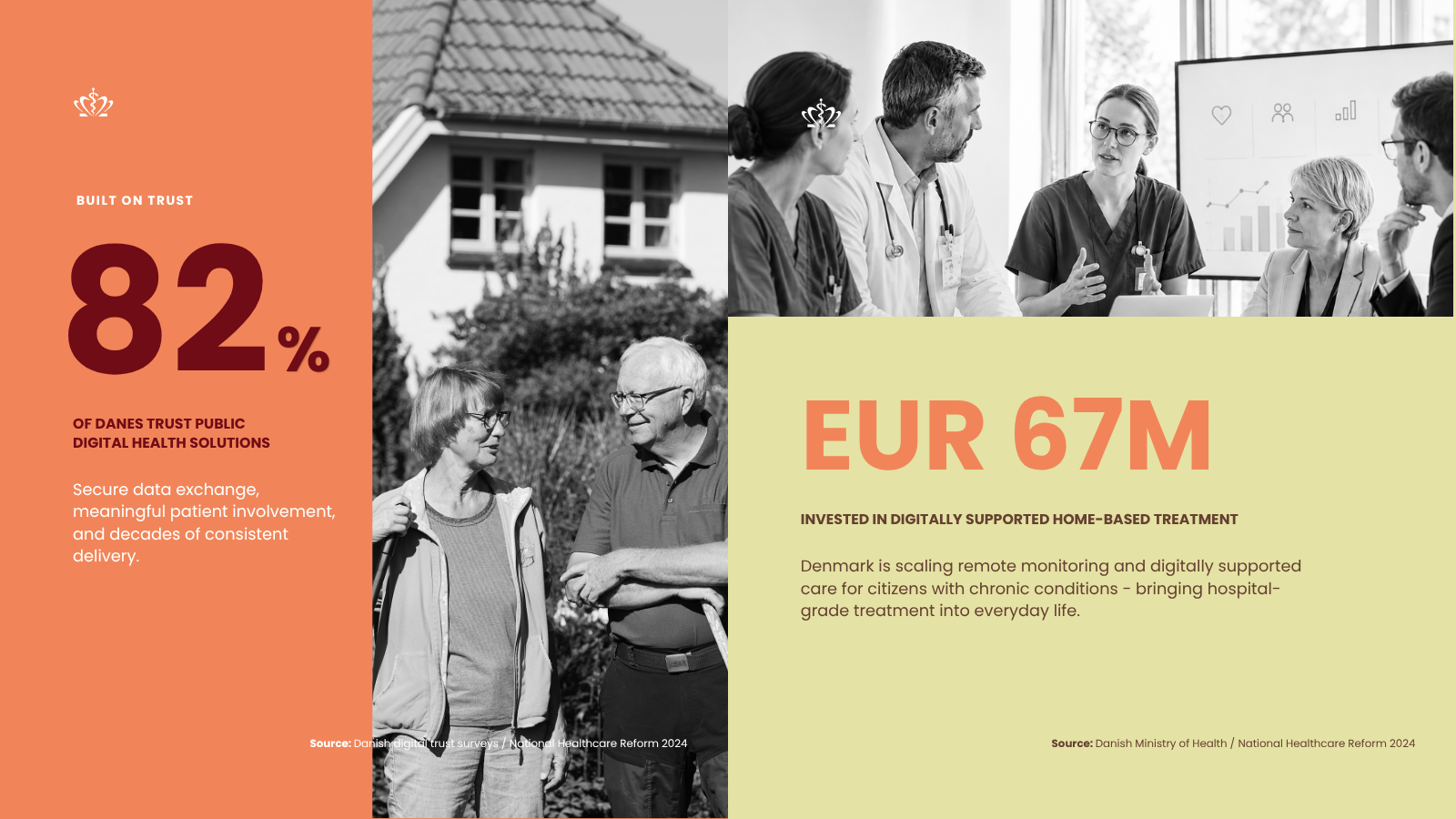
82% of Danes trust public digital health solutions. A figure built on secure data exchange, meaningful patient involvement, and decades of consistent delivery.
A reform that puts digital at the core
Denmark's 2024 National Healthcare Reform sets a clear direction: digitalization is not an add-on but a fundamental tool for building a more equal, coherent and citizen-centered healthcare system. The reform reinforces the role of innovation in tackling today's most pressing challenges – from rising chronic disease burdens to an ageing population – and translates political ambition into concrete institutional arrangements.
Denmark is introducing a Digital Front Door – giving citizens the right to access and monitor their own health digitally first.
That means viewing medical records, medication overviews and lab results, or choosing between in-person and virtual consultations. Digital access is being framed not as a convenience but as a right – putting patients in the role of active partners in their own care, regardless of illness or geography.
Bringing care closer to citizens
Denmark is investing EUR 67 million in scaling remote monitoring and digitally supported care for citizens with chronic conditions. The ambition is to bring hospital-grade treatment into people's homes, reducing the need for physical visits while keeping quality high.
It is a practical expression of a broader principle: that digital solutions should enable personalized, accessible care across sectors, not just within hospital walls.
What comes next: Digital Health Denmark
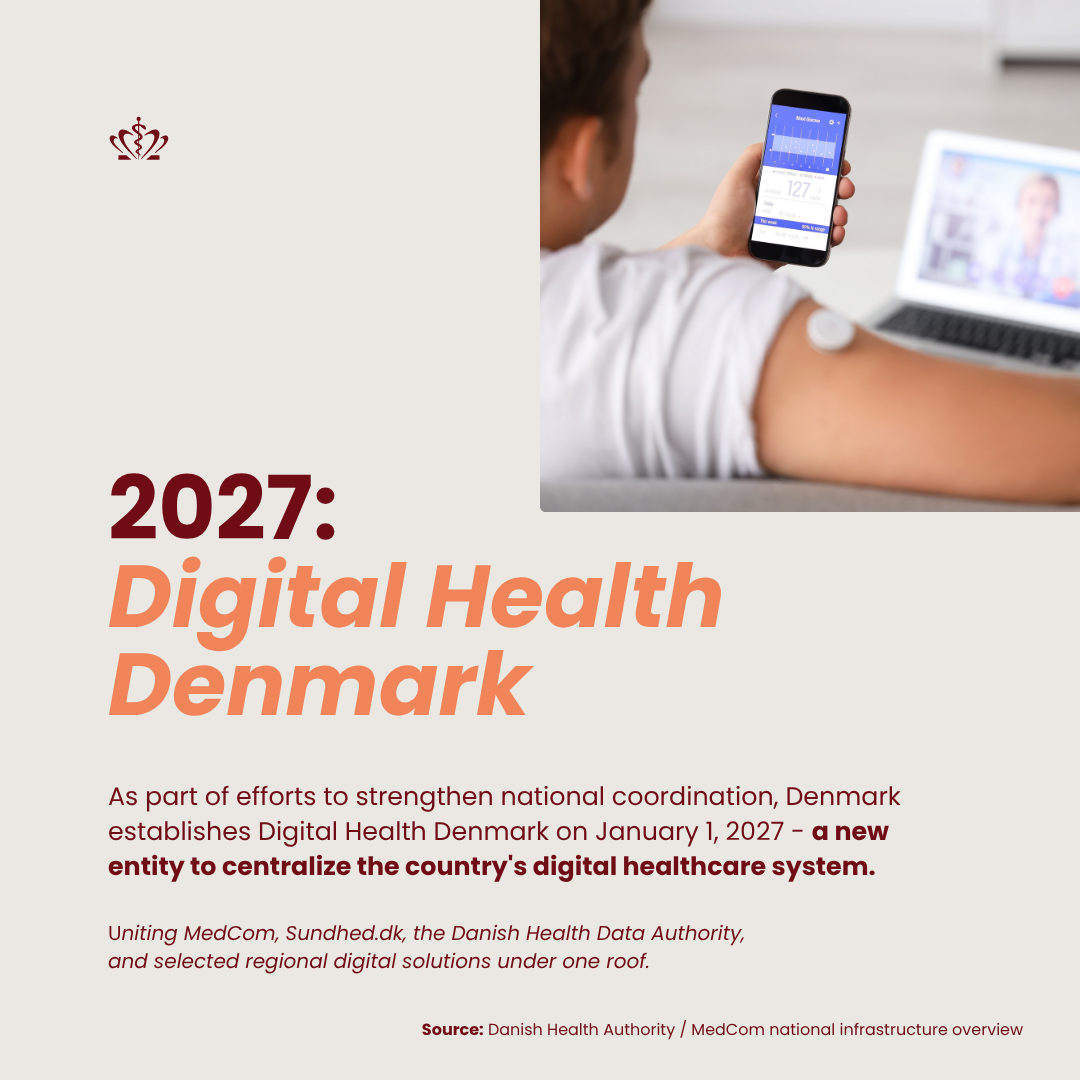
On January 1, 2027, Denmark will establish Digital Health Denmark – a new national entity that unites the Danish national health platforms MedCom, Sundhed.dk, the Danish Health Data Authority and selected regional digital solutions under one roof.
The move is designed to strengthen coordination, accelerate the adoption of telemedicine, AI-powered tools and home-based care, and make the system more connected and future-ready.
Together with the national data platform and the Digital Front Door, it represents the next chapter in a story that has been building for three decades: a healthcare system where digital infrastructure is not a layer on top of care, but the foundation it runs on.